Sunday, March 13, 2011

How Effective is Art in Communication?

Title: How Effective is Art in Communication? 
Date: 12 March 2011
Category: Outside of Class

http://www.photoshopessentials.com
            My friend Emilio Wibisono, a senior at Jakarta International School recently showed me his essay in which he explored the idea of art as a way of taking a part of reality and manipulating it so that the focus is on something unexpected. Thus the artists’ intention is to direct us to something that we would not have noticed if we were living our daily lives. In his essay, he asks whether art then expresses a truth or a lie based on reality. Art is a way of expression for the artists. It is a way for them to communicate their ideas about the world and how they view society. Thus, I believe it is neither truth nor a lie. I believe that art is solely an opinion, not a fact. Sure, art may be based on a fact, but the art itself is an interpretation of this fact, not fact itself. Art does not have to be limited to paintings, drawings and other forms of visual art. It can also include literature, dramas, dance and music etc. I think literature and dramas are types of art that explain the artist’s views and opinions about something whereas visual art, dance and music focus more on the emotion that is aroused by the artist due to a certain topic.
            However, does art necessarily need to be based on a fact or can it be imaginary? Is our imagination based on reality and altered or is it completely random? How do we define what is “completely random”? Is it possible to know if our imagination is purely random and not related to any form of concrete information in any way, since it seems impossible to know all things about the world? If a professor wanted to explain his new observation that he has sufficient evidence about (enough that it could be considered as fact by the majority of the people) through art, is it possible? Would people understand what he is trying to portray? Can art be interpreted in one way or does it always depend on how it is viewed by the audience? Is art then an efficient way of communicating one’s ideas? 

Languages: How Accurate are Translations?

Title: Languages: How Accurate are Translations?
Date: 12 March 2011
Class: Spanish IB SL, Mandarin IB Ab nitio
Category: Other Classes

http://digihome.com.vn
            The idea of communication always fascinates me. It’s interesting how we are able to express our ideas, thoughts, feelings so that another person is able to understand us through the use of body language and words. But how do we fully know whether the other person understands what we’re saying? Of course, there are the situations where this is clearly obvious. For example, if I ask another person “Could you please bring me the cup on the table?” and the person brings me the cup, I could assume that this person understood me (empirical reasoning). However, was it the actual words that this person understood? Or was it my body language? I could’ve looked in that direction or I could’ve pointed to the cup. Are all types of body language controllable, even the most subtle glance in that direction? If body language plays such an important role in communication, is communication possible without body language? In other words, how effective are words itself? (Knowledge Issues)
            In class, students often use translators to express their ideas. Supposedly, the teachers are able to tell whether the student has used a translator or not depending on whether the grammar makes sense (empirical reasoning). Translators are often known to translate words by words regardless of the grammar of the language. If it is obvious that someone’s work consisted of translations from an online translator, how reliable are the translators? Are there exact translations of the words in every language, or are there words that only exist in one language? Is it then possible to express this word in other languages exactly? Can all words be described in such a manner that it fully explains what this person is trying to express? (Knowledge Issues) I remember my friend Wei Syn told me that there is this one word in Chinese that she cannot express in other languages. It was a word that meant more than happiness, more like “happily ever after” but not quite. [Connection] Could other people translate this word exactly into another language? Is language then, personal and have different meanings to each person? If this is true, then isn’t language subjective to each person? Does this mean that words and ideas being expressed never consist a concrete, definite meaning but are dependent on how one interprets it?

Saturday, March 12, 2011

Economics: A Study of Trends

Title: Economics: A Study of Trends
Date: 12 March 2011
Class: Economics IB HL
Category: Other Classes

http://www.greekshares.com
            In Economics, we learn about a lot of graphs showing different trends. We learn to understand these graphs and decide when to use these graphs in order to understand what is happening in the economy. These graphs have been created by economists who have been studying economics for years. Like science, through experimentation and data collection, these intellectual people have found a pattern and figured out how to show this on a graph. The study of economics now depends on these graphs that have been formed, as we base our knowledge on these graphs and these theories.
            Although these graphs are considered to be significant for a reason (the reason being that it has shown this pattern throughout history), how do we depend on these graphs to actually work in our economy? Who decides there is enough information to call it a trend and publish it as a theory? Are the past statistics enough to base our economy on these graphs and risk the people’s lifestyle (employment rates, prices of products, demand for products, interest rates etc.)? Just because it happened for years, does it mean it’ll continue to happen in the future? Will the past necessarily repeat itself? (Knowledge Issues)

A Talk with My Daddy II

Title: A Talk with My Daddy II
Date: 4 March 2011
Category: Outside of Class

http://www.liesyoungwomenbelieve.com
            My dad and I were having heart-to-heart conversation about conflicts in general. We had two opposing ideas. I believed that the two sides that are involved in the conflict must both have faults. However, my dad believed that although in many cases this is true, there are cases in which one person can is totally responsible for the conflict and this one person is the only cause for the problem. To support his argument, he gave me an example. He said, “Let’s say that there is a criminal and a normal citizen on the street and the criminal shoots the citizen to scare him/her in order to steal the money from him/her but does not kill him/her. If the citizen decides to go to court with this issue, then does this mean that the citizen has done wrong too?” I told him that although the criminal was more at fault in this conflict, the citizen also could be responsible for the way he/she appeared to be. Perhaps the citizen was flaunting his/her wealth which caused the criminal to target this person. Our discussion followed with him trying to argue that the citizen had just been “at the wrong place at the wrong time” while I tried to argue that the citizen should have been more responsible about how he/she appears in the public.
            Is there such a thing as “at the wrong place at the wrong time”? Who decides what is right and wrong? How do we determine who is at fault and who is innocent? Can some crimes be accepted if they are under the right circumstances (such as for one’s family, or perhaps being forced to do so by a superior person etc.)? Is it fair to rely and risk one’s life on the judge to decide who is innocent and who is guilty? If we rely on the judge, and we take his words as being knowledge and fact, then are we basing our system of justice on the fallacy of argumentum ad vericundium? (Knowledge Issues)

The Love Drug

Title: The Love Drug
Author: Maia Szalavitz
Publication Info: Published on 17 May 2008 by NewScientist
Date: 12 March 2011
Class: Theory of Knowledge
Category: In Class

http://thumbs.dreamstime.com
            The article discusses the effects of oxytocin – a substance that was used to increase the supply for breastfeeding in the past. It claims that the oxytocin actually creates a hormone that causes a person to feel more attached and sexually aroused by his/he surroundings. All bonding/mating animals have oxytocin in their blood, and this is the cause for our desire to interact with one another and have physical contact. The amount of oxytocin in the blood depended on the person’s childhood, how he/she has been raised, the amount of affection he/she had received etc. The more interaction they received, the higher oxytocin there was present in their blood. Numerous scientists in this article had conducted experiments with rats, prairies and humans to support their conclusions that oxytocin could be used by people to become more interactive, calm, and even cure social illnesses such as autism and social phobia. However how reliable is the information presented? (Knowledge Issue)
            This article presented evidence to support its point. This evidence came from scientists that were of esteemed universities. Why did the author choose to put the description of where this scientist was studying? Is it because he/she thought the article would be more trustworthy if these scientists were from known schools rather than scientists from universities of a lower rank or even, High School students? Wouldn’t this be then, using the fallacy: argumentum ad vericundium to support the reasoning further? If this article is using fallacies to reason, then how reliable is this article itself?  (Knowledge Issues)
            These experiments were conducted on mostly animals such as rats and prairies. Are the scientists making the assumption that humans behave like these animals? How are they so certain that humans will react in the same manner? Even if they did conduct the experiments on humans, how do they justify that all, even most of the humans will react the same way? Aren’t they assuming that most people react the same way (appeal to common practice, hasty generalization)? With these fallacies used to reason their conclusion, how reliable is this experiment and study? (Knowledge Issues)

Woes Be Gone: Need for Sadness?

Title: Woes Be Gone: Need for Sadness?
Author: Jessica Marshall
Publication Info: Published on 1/5/2010 by the Medical Dealer Magazine
Date: 2 March 2011
Class: Theory of Knowledge
Category: In Class

http://doctorgrasshopper.files.wordpress.com
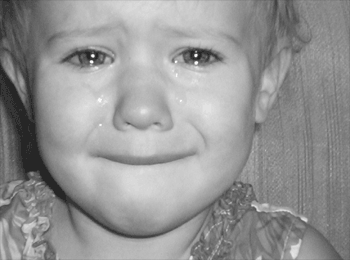
            This article questions the concept of sadness. These days, some people often depend on antidepressants to cure them from sadness. This article deals with the advantages and disadvantages for taking antidepressants, and asks, what is the purpose of “feeling sad” in our lives? Although the feeling of sadness can be painful to the greatest extent, in the article, it also states that sadness can be beneficial to us –it helps us learn from our mistakes, express our emotions, be more aware of our surroundings, be more creative and allows us to be able to communicate without the use of words. However even with these advantages, people do not like to accept the feeling of sadness and prefer to push this emotion out, and not deal with it. To do this, they take antidepressants or go to therapy to “cure” them. One must ask, is sadness something that can be cured? Should it be cured even with these many benefits listed above? How reliable is their argument? (Knowledge Issues)
            How effective are the antidepressants? Is it possible that psychiatrists give the patients blank pills, but say these pills will cure them?  (Knowledge Issues) There are cases where doctors will give patients empty pills, but because the patients believe that they will be cured, they feel that they are cured mentally and physically. [Connection] Could this scenario apply to antidepressants too? If so, how reliable are doctors and our medications? Can sadness actually be cured through medication? Are our beliefs and faith enough to cure our internal struggles and illnesses?   
            [Observation]In my opinion, I think sadness is normal to feel. By normal, I mean that people should feel sad from time to time. As cliché as this may sound, “Life is not always perfect”, and I believe this quote bears truth within itself with the support of empirical knowledge – my past experience. There will be times when we fall, and need to stand back up. However in order to stand back up, we must learn to not fall back down again. We must accept our mistakes and learn from it. Because we don’t like being sad (the reason why people take antidepressants in the first place), we avoid the decisions and actions that led to sadness. The feeling of sadness allows us to change for the better. It allows us to reflect back and make connections to ourselves and our past, as well as helps us to think about the outcomes. By doing this, feeling sad allows us to be more aware of our surroundings and even ourselves as an individual.
[Connection] In my life, the feeling of sadness can be experienced at least once per week although the extent of the feeling may vary. For example, a fight with my mom may cause me to feel angry and sad for a while. Upon feeling this mixture of anger and sadness, I may not be able to think about the cause of this fight; however as time passes I feel that I am naturally inclined to reflect back on what had happened between my mom and me. I say that it feels automatic to reflect because I find that sometimes, I think about what had happened between my mom and me without me even realizing, thinking or having planned to do so. Was our mind designed to evaluate our actions and decisions ever since evolution? Am I the only one who feels this way? [Wonderings] I have asked my friends about their tendencies to reflect, and they have told me that they find themselves doing the same thing as me. Although I trust them as sources of knowledge, how do I know what they exactly mean by reflecting back on their problems? (Knowledge Issue) Do they reflect on the cause of the problem, the effects of the conflict, other perspectives on the fight, different ways in which there could have been a misunderstanding or a combination of all of these? Also, how do I know what they get out of this reflection? How do I justify that they actually learn from their evaluations? Is my experience enough to say that we learn from our mistakes for all people? Just because I learn from my mistakes, does this mean that other people do the same? Isn’t this then, making a hasty generalization in which this would be a fallacy? (Knowledge Issues)