Saturday, May 28, 2011

Blindness in Perception & Gender of Colors

Title: Blindness in Perception & Gender of Colors
Date: 24 May 2011
Class: Chemistry IB HL
Category: Other Classes
http://www.wpclipart.com/
            During a recent chemistry class, my classmates and I were conducting an experiment. We had to add a solute (unknown) into a solvent (water). After we dissolved this solute, we encountered a color change in the substance from clear to blue. I knew I had added a substance to the water which had caused this change in color, but I could no longer see the substance that had been added. I could not see the solutes floating about in the water; the particles had all dissociated.  I realized with this simple experiment that our perceptions could easily deceive us. [Knowledge Issue] If this is the case, then why do we rely on our sense perceptions as a way of knowledge in our day to day lives? Should our sense perception be our primary source of knowledge? What other ways of knowing are more reliable? Is it OK for us to rely on only one way of knowing or is it necessary to use all the ways of knowing to fully understand the idea?
            Focusing on the color change from clear to blue, I came to think of this topic. Blue is accepted to be a masculine color, similar to pink being referred to as a feminine color. I asked my partner, Sang Yeon, “Why do you think blue is considered to be masculine?” She replied with a simple, “I don’t know.” [Knowledge Issues] Why is it that gender is designated to a color? Is it because studies have shown that boys like blue more than girls? What if the statistics for this study changed due to the change in generation? Would the gender still stick with the color or would it change? Who has the authority to change this? [Connection] This idea of a color being either feminine or masculine is so powerful in our society today, that it has influenced social discrimination. For example, men wearing pink are sometimes referred to as being gay just because of the color they are wearing. Why is this issue so important as to limit the colors that we can and cannot like and use?

Half of the world’s languages under threat

Title: Half of the world’s languages under threat
Author: Paul Holmes
Publication Info: Published by Reuters-Paris
Date: 26 May 2011
Class: Theory of Knowledge
Category: In Class
http://www.dailygalaxy.com/
                This article addresses the disappearance of languages in our society. The article supports the claim made by Professor Stephen Wurm that the decline of languages is directly related to the diminution of their speakers. This theory is supported by him making a reference to the disappearance of aboriginal languages in Australia due to the fall in numbers of the native Australian population. This is comparable to that of the United States. Today, the language spoken in America is accepted as being English rather than the native languages of the Navajos, Cherokees, and Iroquois etc. This suggestion makes sense because if all the Koreans were to disappear, the language becomes of no use and thus forgotten among the people. Although I am in favor of this argument, there seems to be many knowledge issues that can be addressed regarding this topic.
            [Knowledge Issues] How accurate is this study? Could it be that the speakers are all dispersed in other countries and thus are multilingual? [Observation] The article does not state the procedure used to carry out this study and so this initiates a sense of doubt to the readers. The procedure is very significant because it allows us to evaluate the accuracy of the study. For example, if this was carried out in an internet-based survey, there is a high possibility that people may choose to take it as a joke and state false information. Also, internet-based surveys usually only allows us to click on one option; thus what happens to the multi-language speakers? Another example could be visiting random people and asking them face-to-face. The problem of lying also applies to this. For example, if a random person asked me what languages I speak, I may not want to give him the correct information seeing as I do not know who he is and what he is capable of doing, and thus I may give him false information, which he would then take to be valid information. Also, a problem caused by this method is that there are so many people in the world that we cannot possibly ask each and every person. [Knowledge Issues] How would we know who to ask? How would we know that a certain person(s) is capable of representing the majority? Because the method is not described in the article, the article’s claim is vulnerable to doubt and disbelief. 

Shhhh, China’s secret female language

Title: Shhhh, China’s secret female language
Author: Jaime Tong
Publication Info: Published on September 27, 2004 by www.trentu.ca
Date: 26 May 2011
Class: Theory of Knowledge
Category: In Class
http://web6774.files.wordpress.com/

             In TOK class, we were assigned to read the article “Shhhh, China’s secret female language” by Jaime Tong. This article was about a secret language of the Chinese women in the Hunan province. This language of NuShu had been passed on by generations and was the language of voice, read by singing and written in like a poem. By having their own language that was idiosyncratic to these women (of this province) alone, they created their own community and formed a sense of unity between each other. Unfortunately, the language of NuShu is very rare in our generation due to the growing population of women attending university. Nevertheless, NuShu will forever remain intact as a significant part of the Chinese culture.
            [Wonderings] Although NuShu will stay as an important aspect of Chinese history, how significant is this language of NuShu if only a few people know how to use it? [Knowledge Issue] If only a few people know how to use it, how effective is it in communication? Of course, within the speakers, it may be very convenient seeing as they will be able to isolate themselves (whenever needed), express ideas and thoughts freely with increased rights to privacy etc. [Knowledge Issue] However, if NuShu was the only language that a person could speak, how well could this person communicate with others? I would be limited to communicate with solely the NuShu speakers. [Knowledge Issue] Does this mean then, that the language one is able to speak determines the number of people one is able to address and communicate with? Does it mean that because there are more English speakers in the world than that of Vietnamese, that if I learn to speak English, I will have a greater number of people I could talk with? [Knowledge Issues] If this is the case, then how would one justify the communication made by body language? Would body language have been created, or have become as popular as it is today if there was only one language spoken by the whole population in the first place? Which is more significant, unity and freedom, or better means of communication and thus the access to freedom from the restriction imposed by the limited number of speakers?

Reliability of Materials

Title: Reliability of Materials
Date: 26 May 2011
Class: Chemistry IB HL
Category: Other Classes

http://www.3bscientific.com/
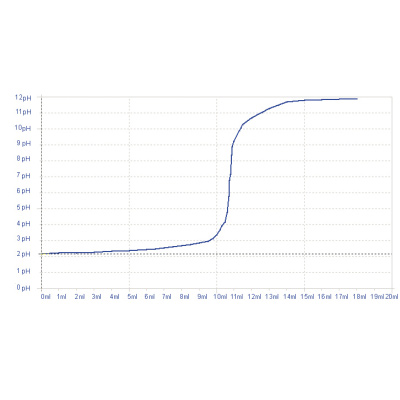
            Today during class, we were continuing our analysis of our collected samples of pool water. A couple weeks ago, we had measured the pH of our samples using a field pH sensor. According to this pH sensor, the samples were portrayed as being basic as they had a pH greater than 7. We were in the process of titrating these samples and thus we added phenolphthalein in order to keep track of when this solution turned neutral. Because these samples were supposedly basic, they were to turn pink in color when we added the phenolphthalein. However once we added this to the sample, the sample remained clear in color. The clear color suggested that the solution was acidic. We were very confused as our sense perception of sight told us that this sample was acidic whereas the pH sensor told us that it was basic, and we knew that the sample could not be both acidic and basic because they were on two ends of the spectrum. Which material is reliable, the pH sensor or the phenolphthalein? In order to make sure all materials were working properly, we retested the pH using a different machine – the Logger Pro Vernier pH sensor. We then faced a different problem. The two pH sensors showed different results. Although both showed that the samples were relatively basic, the two sensors showed greatly varying numbers in pH value.
[Knowledge Issues] How do we determine which material is reliable? How do we know which value is accurate? How dependent should scientists be on these materials? [Observation] Both materials use sense perception as a way of knowing; the pH sensors show their results by numbers on screens which we perceive with our sense of sight, and the phenolphthalein shows its results by the color change which we also perceive with our sense of sight. [Knowledge Issues] If both results are perceived through the sense of perception, how do we come to decide which data is more accurate to the actual value? Can we ever know, or do we need to decide through common sense? How do we know what the majority believe or think? Is a survey of a small group of people enough to assume about the majority of the people?

Sunday, March 13, 2011

How Effective is Art in Communication?

Title: How Effective is Art in Communication? 
Date: 12 March 2011
Category: Outside of Class

http://www.photoshopessentials.com
            My friend Emilio Wibisono, a senior at Jakarta International School recently showed me his essay in which he explored the idea of art as a way of taking a part of reality and manipulating it so that the focus is on something unexpected. Thus the artists’ intention is to direct us to something that we would not have noticed if we were living our daily lives. In his essay, he asks whether art then expresses a truth or a lie based on reality. Art is a way of expression for the artists. It is a way for them to communicate their ideas about the world and how they view society. Thus, I believe it is neither truth nor a lie. I believe that art is solely an opinion, not a fact. Sure, art may be based on a fact, but the art itself is an interpretation of this fact, not fact itself. Art does not have to be limited to paintings, drawings and other forms of visual art. It can also include literature, dramas, dance and music etc. I think literature and dramas are types of art that explain the artist’s views and opinions about something whereas visual art, dance and music focus more on the emotion that is aroused by the artist due to a certain topic.
            However, does art necessarily need to be based on a fact or can it be imaginary? Is our imagination based on reality and altered or is it completely random? How do we define what is “completely random”? Is it possible to know if our imagination is purely random and not related to any form of concrete information in any way, since it seems impossible to know all things about the world? If a professor wanted to explain his new observation that he has sufficient evidence about (enough that it could be considered as fact by the majority of the people) through art, is it possible? Would people understand what he is trying to portray? Can art be interpreted in one way or does it always depend on how it is viewed by the audience? Is art then an efficient way of communicating one’s ideas? 

Languages: How Accurate are Translations?

Title: Languages: How Accurate are Translations?
Date: 12 March 2011
Class: Spanish IB SL, Mandarin IB Ab nitio
Category: Other Classes

http://digihome.com.vn
            The idea of communication always fascinates me. It’s interesting how we are able to express our ideas, thoughts, feelings so that another person is able to understand us through the use of body language and words. But how do we fully know whether the other person understands what we’re saying? Of course, there are the situations where this is clearly obvious. For example, if I ask another person “Could you please bring me the cup on the table?” and the person brings me the cup, I could assume that this person understood me (empirical reasoning). However, was it the actual words that this person understood? Or was it my body language? I could’ve looked in that direction or I could’ve pointed to the cup. Are all types of body language controllable, even the most subtle glance in that direction? If body language plays such an important role in communication, is communication possible without body language? In other words, how effective are words itself? (Knowledge Issues)
            In class, students often use translators to express their ideas. Supposedly, the teachers are able to tell whether the student has used a translator or not depending on whether the grammar makes sense (empirical reasoning). Translators are often known to translate words by words regardless of the grammar of the language. If it is obvious that someone’s work consisted of translations from an online translator, how reliable are the translators? Are there exact translations of the words in every language, or are there words that only exist in one language? Is it then possible to express this word in other languages exactly? Can all words be described in such a manner that it fully explains what this person is trying to express? (Knowledge Issues) I remember my friend Wei Syn told me that there is this one word in Chinese that she cannot express in other languages. It was a word that meant more than happiness, more like “happily ever after” but not quite. [Connection] Could other people translate this word exactly into another language? Is language then, personal and have different meanings to each person? If this is true, then isn’t language subjective to each person? Does this mean that words and ideas being expressed never consist a concrete, definite meaning but are dependent on how one interprets it?

Saturday, March 12, 2011

Economics: A Study of Trends

Title: Economics: A Study of Trends
Date: 12 March 2011
Class: Economics IB HL
Category: Other Classes

http://www.greekshares.com
            In Economics, we learn about a lot of graphs showing different trends. We learn to understand these graphs and decide when to use these graphs in order to understand what is happening in the economy. These graphs have been created by economists who have been studying economics for years. Like science, through experimentation and data collection, these intellectual people have found a pattern and figured out how to show this on a graph. The study of economics now depends on these graphs that have been formed, as we base our knowledge on these graphs and these theories.
            Although these graphs are considered to be significant for a reason (the reason being that it has shown this pattern throughout history), how do we depend on these graphs to actually work in our economy? Who decides there is enough information to call it a trend and publish it as a theory? Are the past statistics enough to base our economy on these graphs and risk the people’s lifestyle (employment rates, prices of products, demand for products, interest rates etc.)? Just because it happened for years, does it mean it’ll continue to happen in the future? Will the past necessarily repeat itself? (Knowledge Issues)