Sunday, September 11, 2011

Who Are You?

Title: Who are you?
Date: 11 September 2011
Category: Outside of Class
http://4.bp.blogspot.com/

A couple days ago, I was talking with my close friend, about whether we knew who we were as a person. She claimed she knew who she was, and wasn’t scared to show it. I, on the other hand, told her I still didn’t know who I was and felt lost. How do we know who we are? How do we define ourselves? [Knowledge Issues] Is it based on other people’s perspectives? Is it based on your preferences and dislikes? Is it who you want to be? [Wonderings] People say “High School is really about finding out who we really are”. The question is then, how?
When asked, she stated that it’s obvious when people are acting fake. She reasoned that some people are so caught up with the idea of trying to fit in with the crowd, that they seem unnatural. She claimed that if I wasn’t scared of being different and knew how I was different from other people and wasn’t hiding this, I was comfortable with who I was. By being comfortable with myself meant that I was able to know who I was and just “be me” without acting like anyone else. This reminded me of the popular TV show “Glee”. [Connection] Throughout the episodes, the underdogs of the High School student body try to prove that they are not scared to be themselves. “Being me”. What does this mean? Both my friend and the story behind “Glee” appeared to be telling me basically to act like myself and no one else. However, how can we know whether we are acting or not? [Knowledge Issue] I consider myself to be an outgoing person; however, how do I know that I’m not acting this way? I could believe that I’m outgoing, but it doesn’t necessarily mean that I am. In George Orwell’s novel 1984, the character O’Brian states that we could believe 2+2 = 5 if we convinced ourselves hard enough. [Connection] If this is true, then everything we believe could just be in our heads, not reality (if there is such thing as “reality” at that). Some may reason that the other people’s perceptions are a reliable way to know who we are. However, how do we know that they are stating the truth? [Wondering] Could it not be that they have also convinced themselves of who we are, and thus created a false image in their heads of who we are? With this said, how reliable are other people’s opinions and thoughts? [Knowledge Issue]
Can we ever know who we really are? Does it even matter who we are, as long as we’re content with how we’re understood by others? Is there such a thing as identity, or is it simply a concept in our minds? [Wonderings] For me, I feel that it doesn’t matter whether we know who we really are, as long as we like who we are, and stay committed to that persona. Perhaps this way, that character can become you, and thus become your identity. [Knower’s perspective]

Sunday, May 29, 2011

Connotations aside, many names can be nice

Title: Connotations aside, many names can be nice
Author: Brandon Rogers
Date: 26 May 2011
Class: Theory of Knowledge
Category: In Class
http://3.bp.blogspot.com/

            An article assigned by my TOK teacher was called “Connotations aside, many names can be nice” by Brandon Rogers. In this article, he explored word’s connotations and its pronunciation and sound. He stated that many words with negative connotation could be pleasing to the ears such as “Chlamydia” or “militia” etc. He claimed that he could have named his children using these names if he was only evaluating the sound of the names. With this, he asked the question of, “Do words have to mean pretty things to sound pretty?” (Rogers, par.2).
            Personally, I think words can sound pretty without meaning pretty. For example, although the word “halcyon” has a positive meaning, I do not find this word to sound pretty. [Connection] Instead, this word reminds me of the character, Hulk, from the movie. These words sound similar to the ears; however they have completely different connotations. One implies peace, whereas the other draws an image of a green monster. Another example could be of the word, “Chlamydia”. Although this word refers to a sexually transmitted disease (STD), I believe it is pleasant to the ears. While reading this article, I did not know what this word “Chlamydia” was referring to. This made me think of the foreigner’s reactions. I began to think, [Knowledge Issues] how would a foreigner be able to distinguish a word of positive connotation to another of a negative one? Do all people have the same “gut feeling” or “sense” of which word is positive and which is negative, regardless of race and nationality? [Connection] When preparing for the SAT, people tell me to use my gut feeling when determining the fill-in-the-blanks for the vocabulary section. In other words, I had to decide the word with the appropriate connotation. [Knowledge Issues] However, seeing that I thought the words “Chlamydia”, “militia”, “Artillery” and “Citronella” and many more to have positive connotations, are my gut feelings reliable to determine which words have positive or negative connotations? Is it fair and right for people to tell others to rely on your senses to complete the SAT fill-in-the-blank questions? Who decides what is considered as having a positive connotation and which is to have a negative connotation?

Saturday, May 28, 2011

SAT Scores & Evaluating WOKs

Title: SAT Scores & Evaluating WOKs
Date: 28 May 2011
Category: Outside of Class
http://www.sattesting.org/

                 SAT scores were posted today by the Collegeboard organization. As I saw my grade, I was disappointed as I had not received the score I had hoped and prayed for. I felt discouraged and angry. I had worked so hard to do as many practice questions as I could in the time I had, and had dedicated myself to learning 20 vocabularies each night. I thought to myself, “maybe I didn’t pray hard enough” and “maybe I didn’t study hard enough”. My friends seemed to get high scores. I tried to comfort myself by telling myself that it was my first time. My mom couldn’t help but show her disappointment in me. I could tell she had wanted more from me by the tone of her voice, and her facial expressions [Language as a WOK]. She was quieter, and she looked sad with her eyes drooping down a little. [Knowledge Issue] Is this analysis accepted universally? I began to be grow more disappointed at myself for not having been able to measure up to her standards. I began to think, “How am I going to go to a university with a score like this?” etc.  My disappointment began to develop into anger. With anger, I began to question the accuracy of the SAT. These questions may have aroused from anger, however I believe these questions are valid knowledge issues.
Why is it that most universities are heavily influenced by our SAT scores when making admission decisions? [Knowledge Issues]  Are SAT scores reliable in determining our future opportunities? How valid are the conversions from the number of questions we get correct to the scores themselves? Who determines how the number is converted? Is it fair that we must depend on this idea, proposed by this person of authority, for the stability of our future? Evaluating my emotion at the time, if I had faced a different emotion, would I have thought of different knowledge issues? For example, if I was happy with the SAT score that I received, I may be inclined to think that the SAT scores are really accurate in determining our success. Because of this, I may be restricted from asking the accuracy of this test, or evaluating how reliable it is. Instead I may ask, “How do the Collegeboard derive questions to accurately measure our intelligence in our reasoning?” etc. However, if I received a low score, I would want to believe that SAT scores are unreliable. In this way, our emotion allows us to have a different point of view [Emotion as a WOK].

Blindness in Perception & Gender of Colors

Title: Blindness in Perception & Gender of Colors
Date: 24 May 2011
Class: Chemistry IB HL
Category: Other Classes
http://www.wpclipart.com/
            During a recent chemistry class, my classmates and I were conducting an experiment. We had to add a solute (unknown) into a solvent (water). After we dissolved this solute, we encountered a color change in the substance from clear to blue. I knew I had added a substance to the water which had caused this change in color, but I could no longer see the substance that had been added. I could not see the solutes floating about in the water; the particles had all dissociated.  I realized with this simple experiment that our perceptions could easily deceive us. [Knowledge Issue] If this is the case, then why do we rely on our sense perceptions as a way of knowledge in our day to day lives? Should our sense perception be our primary source of knowledge? What other ways of knowing are more reliable? Is it OK for us to rely on only one way of knowing or is it necessary to use all the ways of knowing to fully understand the idea?
            Focusing on the color change from clear to blue, I came to think of this topic. Blue is accepted to be a masculine color, similar to pink being referred to as a feminine color. I asked my partner, Sang Yeon, “Why do you think blue is considered to be masculine?” She replied with a simple, “I don’t know.” [Knowledge Issues] Why is it that gender is designated to a color? Is it because studies have shown that boys like blue more than girls? What if the statistics for this study changed due to the change in generation? Would the gender still stick with the color or would it change? Who has the authority to change this? [Connection] This idea of a color being either feminine or masculine is so powerful in our society today, that it has influenced social discrimination. For example, men wearing pink are sometimes referred to as being gay just because of the color they are wearing. Why is this issue so important as to limit the colors that we can and cannot like and use?

Half of the world’s languages under threat

Title: Half of the world’s languages under threat
Author: Paul Holmes
Publication Info: Published by Reuters-Paris
Date: 26 May 2011
Class: Theory of Knowledge
Category: In Class
http://www.dailygalaxy.com/
                This article addresses the disappearance of languages in our society. The article supports the claim made by Professor Stephen Wurm that the decline of languages is directly related to the diminution of their speakers. This theory is supported by him making a reference to the disappearance of aboriginal languages in Australia due to the fall in numbers of the native Australian population. This is comparable to that of the United States. Today, the language spoken in America is accepted as being English rather than the native languages of the Navajos, Cherokees, and Iroquois etc. This suggestion makes sense because if all the Koreans were to disappear, the language becomes of no use and thus forgotten among the people. Although I am in favor of this argument, there seems to be many knowledge issues that can be addressed regarding this topic.
            [Knowledge Issues] How accurate is this study? Could it be that the speakers are all dispersed in other countries and thus are multilingual? [Observation] The article does not state the procedure used to carry out this study and so this initiates a sense of doubt to the readers. The procedure is very significant because it allows us to evaluate the accuracy of the study. For example, if this was carried out in an internet-based survey, there is a high possibility that people may choose to take it as a joke and state false information. Also, internet-based surveys usually only allows us to click on one option; thus what happens to the multi-language speakers? Another example could be visiting random people and asking them face-to-face. The problem of lying also applies to this. For example, if a random person asked me what languages I speak, I may not want to give him the correct information seeing as I do not know who he is and what he is capable of doing, and thus I may give him false information, which he would then take to be valid information. Also, a problem caused by this method is that there are so many people in the world that we cannot possibly ask each and every person. [Knowledge Issues] How would we know who to ask? How would we know that a certain person(s) is capable of representing the majority? Because the method is not described in the article, the article’s claim is vulnerable to doubt and disbelief. 

Shhhh, China’s secret female language

Title: Shhhh, China’s secret female language
Author: Jaime Tong
Publication Info: Published on September 27, 2004 by www.trentu.ca
Date: 26 May 2011
Class: Theory of Knowledge
Category: In Class
http://web6774.files.wordpress.com/

             In TOK class, we were assigned to read the article “Shhhh, China’s secret female language” by Jaime Tong. This article was about a secret language of the Chinese women in the Hunan province. This language of NuShu had been passed on by generations and was the language of voice, read by singing and written in like a poem. By having their own language that was idiosyncratic to these women (of this province) alone, they created their own community and formed a sense of unity between each other. Unfortunately, the language of NuShu is very rare in our generation due to the growing population of women attending university. Nevertheless, NuShu will forever remain intact as a significant part of the Chinese culture.
            [Wonderings] Although NuShu will stay as an important aspect of Chinese history, how significant is this language of NuShu if only a few people know how to use it? [Knowledge Issue] If only a few people know how to use it, how effective is it in communication? Of course, within the speakers, it may be very convenient seeing as they will be able to isolate themselves (whenever needed), express ideas and thoughts freely with increased rights to privacy etc. [Knowledge Issue] However, if NuShu was the only language that a person could speak, how well could this person communicate with others? I would be limited to communicate with solely the NuShu speakers. [Knowledge Issue] Does this mean then, that the language one is able to speak determines the number of people one is able to address and communicate with? Does it mean that because there are more English speakers in the world than that of Vietnamese, that if I learn to speak English, I will have a greater number of people I could talk with? [Knowledge Issues] If this is the case, then how would one justify the communication made by body language? Would body language have been created, or have become as popular as it is today if there was only one language spoken by the whole population in the first place? Which is more significant, unity and freedom, or better means of communication and thus the access to freedom from the restriction imposed by the limited number of speakers?

Reliability of Materials

Title: Reliability of Materials
Date: 26 May 2011
Class: Chemistry IB HL
Category: Other Classes

http://www.3bscientific.com/
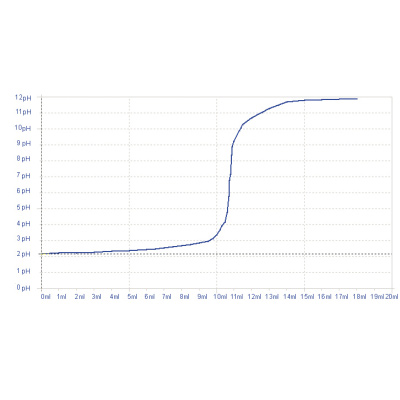
            Today during class, we were continuing our analysis of our collected samples of pool water. A couple weeks ago, we had measured the pH of our samples using a field pH sensor. According to this pH sensor, the samples were portrayed as being basic as they had a pH greater than 7. We were in the process of titrating these samples and thus we added phenolphthalein in order to keep track of when this solution turned neutral. Because these samples were supposedly basic, they were to turn pink in color when we added the phenolphthalein. However once we added this to the sample, the sample remained clear in color. The clear color suggested that the solution was acidic. We were very confused as our sense perception of sight told us that this sample was acidic whereas the pH sensor told us that it was basic, and we knew that the sample could not be both acidic and basic because they were on two ends of the spectrum. Which material is reliable, the pH sensor or the phenolphthalein? In order to make sure all materials were working properly, we retested the pH using a different machine – the Logger Pro Vernier pH sensor. We then faced a different problem. The two pH sensors showed different results. Although both showed that the samples were relatively basic, the two sensors showed greatly varying numbers in pH value.
[Knowledge Issues] How do we determine which material is reliable? How do we know which value is accurate? How dependent should scientists be on these materials? [Observation] Both materials use sense perception as a way of knowing; the pH sensors show their results by numbers on screens which we perceive with our sense of sight, and the phenolphthalein shows its results by the color change which we also perceive with our sense of sight. [Knowledge Issues] If both results are perceived through the sense of perception, how do we come to decide which data is more accurate to the actual value? Can we ever know, or do we need to decide through common sense? How do we know what the majority believe or think? Is a survey of a small group of people enough to assume about the majority of the people?